
1. Big Island Real Estate: A Current Snapshot (first half of 2025)
The Big Island's real estate landscape in early 2025 presents a period of recalibration, mirroring broader trends across Hawaii. The intrinsic appeal of owning property in Hawaii remains a powerful draw; however, the market is currently shaped by a confluence of factors including fluctuating interest rates, national economic sentiment, and specific local inventory dynamics. Current forecasts suggest that mortgage rates are likely to stabilize in the 6-7% range for 30-year fixed loans during 2025.1 Despite potential headwinds, a significant market crash on the Big Island, or statewide, is considered unlikely in 2025, primarily due to the enduring desirability of Hawaii and persistently limited inventory, although the rapid pace of price growth seen in previous years may moderate.1
Recent data from May 2025 for the Big Island overall reveals a mixed performance. The median sales price for single-family homes (SFH) climbed 12% year-over-year (YoY) to $597,500. In stark contrast, the median sales price for condominiums saw a significant decrease of 21% YoY, settling at $620,000. Sales activity also contracted, with SFH sales down 28% YoY and condo sales plummeting by 44% YoY. Correspondingly, the time properties spent on the market increased, with the median Days on Market (DOM) for SFH rising by 12% to 29 days, and condo DOM surging by a remarkable 171% to 46 days.2 This island-wide overview paints a picture of a market that is cooling and becoming more varied, particularly when comparing the SFH and condo segments.
Statewide figures for Q1 2025 provide additional context: the median price for SFH across Hawaii rose 7% YoY to $1,050,000, while the statewide condo median price dipped by 3% YoY to $550,000. Sales activity for both categories declined by 7% YoY statewide during the first quarter.3
Several key factors are influencing these market dynamics:
- Interest Rates: While the luxury segment, often characterized by cash transactions, is less directly affected by mortgage rate fluctuations, higher rates are impacting affordability and purchasing power for mid-tier buyers.1 This is a critical variable shaping overall demand and the pace of sales.
- Inventory Levels: A persistent undersupply of single-family homes continues to provide price support in many market segments.1 However, the condominium sector is experiencing an increase in available inventory in certain areas, which is contributing to different market pressures.4
- Buyer Caution: Broader economic uncertainties, both nationally and locally—such as the "condo insurance crisis" noted in Kailua-Kona 5—are fostering a degree of caution among prospective buyers. This can translate into longer decision-making periods and a more measured approach to acquisitions.4
- Luxury Segment Resilience: The high-end market, typically defined as properties valued at $3 million and above, continues to demonstrate strength. This segment is often bolstered by cash buyers and is less susceptible to conventional market pressures.1
The divergence between the single-family home and condominium markets is a prominent feature of the current Big Island landscape. While SFH median prices have appreciated year-over-year, condo median prices have seen a substantial depreciation island-wide.2 This suggests differing supply-demand fundamentals and buyer sensitivities. Single-family homes often cater to a distinct buyer profile, including primary residents and those seeking more space, who may be less reactive to short-term market shifts or carrying costs compared to some condominium investors. Furthermore, inherent limitations on land and new construction for SFH naturally contribute to tighter supply, which underpins pricing. Condominium markets, on the other hand, can be more readily influenced by investor sentiment, changes in rental regulations (such as potential restrictions on short-term rentals 1), and specific building or association-related issues, exemplified by the aforementioned insurance challenges in Kailua-Kona.5 The 21% drop in the Big Island's median condo price is a significant indicator of the pressures this segment is facing.
Despite a considerable contraction in the number of single-family homes sold (-28% YoY for the Big Island 2), the median SFH price still managed a 12% increase. This phenomenon often occurs when, despite fewer overall transactions (potentially due to affordability constraints, higher interest rates, or increased buyer caution), the sales that do close are still commanding strong prices. Persistent low inventory for SFH means that even with moderated demand, sellers of well-maintained or highly desirable properties can often maintain their price expectations. It may also imply that the lower end of the market is experiencing a greater slowdown in sales, thereby pushing the median price of actual sales upwards.
The notable increase in Days on Market for both SFH (+12%) and particularly for condos (+171%) across the Big Island 2 serves as a strong leading indicator of a market transitioning away from the frenetic pace observed in recent years. Longer DOM figures suggest that buyers are gaining more leverage and are taking more time to evaluate their options. Consequently, sellers may need to adjust their expectations regarding pricing and the time required to achieve a sale. For condominiums, the 171% surge in DOM is especially stark, signaling a significant slowdown that aligns with the observed price declines and reduced sales volume. This points to an environment where condo inventory is substantially outpacing current demand.
2. North Kona Market Analysis: Shifting Tides
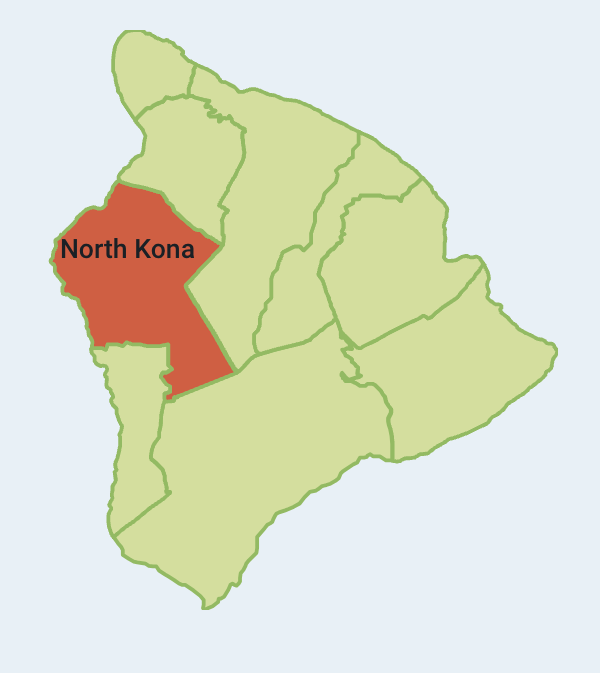
North Kona, with Kailua-Kona as its primary hub, represents a significant and dynamic component of the Big Island's real estate market. Recent data paints a complex picture: single-family homes are demonstrating a degree of price resilience even as activity levels moderate, while the condominium segment is contending with more pronounced headwinds.
Single-Family Homes (SFH)
The median sales price for SFH in North Kona has shown modest appreciation. In April 2025, specific data for Kailua-Kona indicated a median price of $1,395,000, a 3.3% increase YoY.4 Broader North Kona data from Redfin for the same month showed a median sale price of $1,075,000, up 7.5% YoY.7 Year-to-date (YTD) figures through April 2025 from the West Hawaii REALTORS® reported a median SFH price in North Kona of $1,372,500, reflecting a 1.67% YoY gain.8 For Q1 2025, Hawaii Information Service (HIS) data indicated a median SFH sales price of $1,420,000, a 3% increase compared to Q1 2024.9 While figures vary slightly between sources due to differing data pools and methodologies, the general trend points towards modest price growth.
The number of SFH units sold in North Kona presents a mixed trend. Redfin reported 160 homes sold in April 2025, a decrease of 15.3% YoY.7 However, YTD data through April 2025 from West Hawaii REALTORS® showed 134 homes sold, only a slight dip of 1.47% YoY.8 Earlier in the year, Q1 2025 saw 107 SFH sales, an increase of 3% compared to Q1 2024.9 This suggests that while the first quarter started relatively strong, April experienced a slowdown in sales activity. This is further corroborated by reports that pending SFH sales in Kailua-Kona dropped by 25.7% in April.4
Days on Market for SFH in North Kona also show considerable variation. For sold homes in Kailua-Kona, the median DOM in April 2025 was a remarkably swift 18 days, down 18% YoY, suggesting that well-priced and desirable properties are moving very quickly.4 Broader North Kona data from Redfin for April indicated a median DOM of 109 days, an increase of 25 days YoY 7, while Realtor.com reported a median DOM of 77 days for the same period, terming it "slightly up since last year".10 It is important to distinguish these figures from the average listing age for active listings; Rocket Homes reported this at 224 days for North Kona in April 2025, a 37.6% YoY increase.11 This higher figure for active listings suggests that while some homes sell fast, others are lingering on the market, contributing to an overall lengthening of market time for the area.
Regarding how close sales are to asking prices, homes in North Kona sold for approximately 3.2% below the list price on average in April 2025 (a sale-to-list price ratio of 96.8%), a decrease of 0.94 percentage points YoY.7 Realtor.com reported a similar figure, with homes selling for 2.01% below asking on average in April.10
Inventory for SFH in Kailua-Kona remained tight in April 2025, estimated at about 70% of pre-COVID levels, translating to a steady 4.5 months of supply.4 For the broader North Kona area, there were 491 homes listed for sale in April 2025, an 11.6% increase from March 2025.11
Condominiums
The condominium market in North Kona is experiencing a more discernible cooling trend. The median sales price for condos in Kailua-Kona in April 2025 was $679,900, a marginal decrease of 0.4% YoY.4 YTD figures through April 2025 from West Hawaii REALTORS® for North Kona condos showed a median price of $672,000, down 1.54% YoY.8 This contrasts with a stronger Q1 2025, where the median condo sales price in North Kona was $694,500, a 13% increase compared to Q1 2024.9 This pattern suggests that while the first quarter showed price appreciation, April brought a stall or slight decline.
The number of condo units sold in North Kona also reflects this cooling. YTD through April 2025, 106 condos were sold, a 7.02% decrease YoY.8 This followed a Q1 2025 where 82 condos sold, marking a 22% increase over Q1 2024.9 Similar to the SFH segment, a relatively robust first quarter was followed by a slowdown, with pending condo sales in Kailua-Kona reportedly dropping by 10.4% in April.4
A dramatic shift is evident in the Days on Market for North Kona condos. In Kailua-Kona, the median DOM for condos soared to 53 days in April 2025, a staggering 278.6% increase compared to the previous year.4 Q1 2025 data for Kailua-Kona already hinted at this, with condo inventory reported up 130% and pending sales down 37.5%.5
Price reductions have become increasingly common in the North Kona condo market. In Q1 2025, 52.9% of sold condo listings in Kailua-Kona had experienced a price reduction before selling, a significant increase from 40.1% in 2024. The average price cut was 7.6%. Furthermore, nearly half (49.1%) of active condo listings in Q1 had undergone price reductions.5
Condo inventory in Kailua-Kona has risen, with active listings in April 2025 approaching pre-pandemic levels, resulting in an increased 7.2 months of supply.4 This aligns with Q1 reports of condo inventory being up 130% YoY in Kailua-Kona.5
North Kona Summary
The North Kona market clearly illustrates a "tale of two markets." The single-family home sector maintains price resilience, largely due to persistently tight inventory.4 Desirable, well-priced SFH properties can still attract buyers and sell very quickly, as evidenced by the 18-day median DOM for sold homes in Kailua-Kona.4 However, the condominium market is undergoing a significant softening. This is characterized by rising inventory levels, a sharp decline in sales activity (particularly in pending sales), dramatically extended Days on Market, and a greater prevalence of price reductions needed to secure a sale.4
This divergence can be attributed to several factors. For SFH, the limited supply acts as a fundamental price support. Demand, though perhaps tempered by higher interest rates, continues to meet or exceed the availability of attractive properties. For condos, the scenario is different. Increased inventory provides buyers with more options and greater negotiating power.4 Moreover, the "condo insurance crisis" 5 is a significant local factor that is likely deterring some buyers or making financing and ownership more costly, thereby dampening demand. General affordability constraints and economic caution 4 may also exert a greater influence on the typical condo buyer compared to those in the market for single-family homes in this region.
The market also shows signs of monthly volatility contrasting with previous quarterly stability. Data from Q1 2025 9 presented a relatively stronger picture for North Kona—with both SFH and condos showing YoY increases in price and sales—than the more recent April 2025 data 4, which points to a slowdown, especially in terms of pending sales. While real estate markets can experience month-to-month fluctuations, and April's "economic turbulence" and "buyer confidence rattle" 4 might represent a temporary dip, the sharp rise in condo DOM and inventory suggests a more structural shift for that segment. The change from positive YTD sales figures through March to negative by the end of April 4 is a key marker of this recent cooling trend.
The high percentage of condominiums requiring price reductions before sale—52.9% YTD in Q1 5—is a direct reflection of initial seller expectations being misaligned with current market realities. This often happens when sellers anchor their pricing to a previous, hotter market. As buyers become more cautious and wield more negotiating power, overpriced listings tend to stagnate. The comparatively lower percentage of price reductions for SFH (28% YTD in Q1 5) suggests that SFH sellers are either pricing more in line with the current market or that demand remains sufficiently robust to meet their asking prices more frequently.
3. South Kohala Market Analysis: Resilience and Opportunity
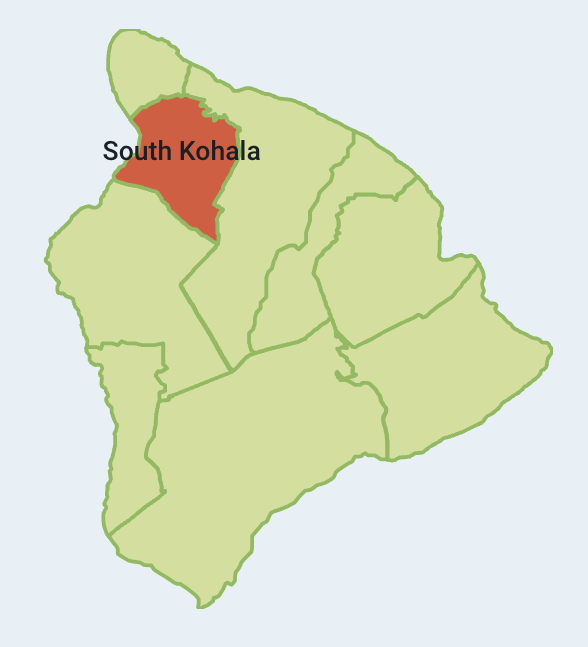
South Kohala, renowned for its upscale resort communities and luxury properties, generally exhibits a more robust market performance, particularly within the single-family home and high-end segments. While condominiums present a more mixed scenario, the overall tone for South Kohala is one of resilience and continued buyer interest, especially for premium offerings.
Single-Family Homes (SFH)
The median sales price for SFH in South Kohala has demonstrated strong appreciation. In April 2025, Redfin reported a median sale price of $1,154,000 (also rounded to $1.2M in the same source), an 11.5% increase YoY.12 YTD figures through April 2025 from West Hawaii REALTORS® showed an even higher median price of $1,200,000, marking a significant 15.11% YoY gain.8 The first quarter of 2025 was particularly strong, with HIS data indicating a median SFH sales price of $1,240,000, a substantial 23% increase compared to Q1 2024.9 The luxury tier within this market is especially buoyant; for homes priced at $3 million and above along the Kohala Coast, the median sold price in Q1 2025 surged by 35.5% YoY to $7.25 million.6
Sales activity for SFH in South Kohala has also been positive. Redfin reported 94 homes sold in April 2025, a modest 3.3% increase YoY.12 YTD data through April 2025 from West Hawaii REALTORS® indicated 71 SFH sales, a robust 31.48% increase YoY.8 Similarly, Q1 2025 saw 51 SFH sales, a 50% increase over Q1 2024.9 Activity in the higher price brackets was also notable: for properties over $1 million on the Kohala Coast, Q1 2025 saw 54 sales, up 13% YoY. For properties over $3 million, there were 13 sales in Q1, a 63% increase YoY 6, underscoring strong demand at the luxury end.
Days on Market for SFH in South Kohala present a nuanced picture. The general market saw a median DOM of 125 days in April 2025, an increase of 38 days YoY.12 However, in the luxury segment ($3M+), properties moved faster in Q1 2025, with the average DOM dropping significantly from 81 days in Q1 2024 to just 54 days in Q1 2025, a 33% reduction.6 This suggests that while the broader market may be taking longer to transact, well-priced luxury homes are in demand and selling relatively quickly.
The sale-to-list price ratio for South Kohala SFH in April 2025 was 96.5%, meaning homes sold on average for 3.5% below the list price. This was a 1.3 percentage point decrease YoY. Additionally, 10.6% of homes sold above the list price, a 2.5 percentage point decrease from the previous year.12
Inventory in the luxury segment ($3M+) on the Kohala Coast reportedly grew by nearly 20% YoY in Q1 2025.6
Condominiums
The condominium market in South Kohala shows signs of stability in pricing but a contraction in sales activity. YTD figures through April 2025 from West Hawaii REALTORS® indicated a median condo price of $1,045,700, a slight 1.03% increase YoY.8 HIS data for Q1 2025 reported an identical median sales price of $1,045,700, also up 1% compared to Q1 2024.9 This consistency suggests a stable median price point for condos that are selling.
However, the number of condo units sold has decreased significantly. YTD through April 2025, 57 condos were sold in South Kohala, a 24.00% decline YoY.8 This aligns closely with Q1 2025 figures, which saw 37 condos sold, a 26% decrease from Q1 2024.9 Specific recent DOM figures for South Kohala condos are not readily available, but the overall Big Island trend showed a 171% YoY increase in condo DOM for April 2, suggesting a general slowdown. Data on current inventory levels or months of supply specifically for South Kohala condos was not detailed in the available information.
South Kohala Summary
South Kohala's single-family home market, particularly at the luxury end, is demonstrating robust performance with significant year-over-year price appreciation and increased sales volume.6 The luxury segment ($3M+) is characterized by faster sales and resilient buyer demand, even with an increase in inventory.6 This strength is often attributed to South Kohala's attraction for a wealthier demographic, including a higher proportion of cash buyers who are less sensitive to fluctuations in interest rates.1 The allure of resort-style living and exclusive communities such as Kukio, Hualalai 1, and Mauna Kea Resort 6 fuels this demand. The limited availability of these high-caliber properties naturally maintains upward pressure on prices, as evidenced by the substantial 35.5% jump in the median price for $3M+ homes.6
In contrast, while SFH properties thrive, the South Kohala condominium market presents a more subdued picture. It has experienced a significant drop in sales volume year-over-year (approximately -24% to -26% 8), despite median prices remaining relatively stable (around +1% YoY 8). This combination of stable prices alongside a considerable decrease in sales volume suggests that while prices haven't declined, overall demand has weakened. Fewer transactions are occurring, but those that do close are achieving price points similar to the previous year. This could imply that only the most competitively priced or uniquely desirable condos are successfully transacting. Potential buyers in this segment might be exercising more caution, facing affordability or carrying cost concerns similar to those in other condo markets, or perhaps the available inventory does not fully align with current buyer preferences.
Although luxury homes ($3M+) are selling more quickly 6, the general Days on Market for all homes in South Kohala has increased (125 days, +38 days YoY 12). This indicates that properties outside the prime luxury category, or those not priced as competitively, are taking longer to find buyers. The market appears to be growing more discerning, allowing buyers more time to evaluate their options. Consequently, sellers of non-luxury or less unique properties may need to exercise more patience or demonstrate greater flexibility on price. The average sale-to-list price ratio of 96.5% 12 supports this, suggesting that some degree of negotiation is taking place.
4. Navigating the Market: Outlook and Recommendations
The early 2025 real estate market in North Kona and South Kohala presents a landscape of varied performance and emerging trends. Understanding these nuances is key for buyers, sellers, and investors aiming to make informed decisions.
Comparative Insights
A comparison between North Kona and South Kohala reveals distinct market characteristics. South Kohala's single-family home market, particularly in the luxury segment, appears more buoyant, exhibiting stronger price appreciation and more vigorous sales activity compared to single-family homes in North Kona. Conversely, North Kona's condominium market is currently facing more significant challenges—including issues with inventory, extended Days on Market, and downward price pressure—than what is explicitly detailed for South Kohala condos, although it's important to note that South Kohala's condo sales volume has also seen a notable decrease.
Across both districts, a common thread is the relative strength of the single-family home market, generally supported by tighter inventory levels. Condominium markets are more varied; North Kona shows clear signs of softening, while South Kohala demonstrates stable median prices but at a much lower sales volume.
Overall Market Sentiment and Future Trends
The consensus is that the market is undergoing a shift, not a crash.1 Moderate growth is anticipated to continue in prime locations, though there will likely be pockets of softness. Interest rates, forecasted to hover between 6-7% 1, will remain a pivotal factor influencing affordability and market activity. The luxury segment is expected to maintain its resilience, largely driven by high-net-worth individuals and cash transactions.1 Mid-range housing, however, may experience slower price growth due to these affordability pressures.
An important development is the potential for increased negotiating power for buyers in certain market segments, particularly where inventory is on the rise, such as with North Kona condominiums.1 Emerging trends also indicate a growing interest in sustainable building practices and properties that accommodate remote work.1
In times of market recalibration or uncertainty, there's often a "flight to quality," where buyers, especially those with substantial means, gravitate towards assets perceived as safer or of higher intrinsic value. This may partly explain the continued strength and even acceleration observed in the South Kohala luxury SFH market 6, while more standard or investor-focused properties, such as some condominiums in North Kona, experience a cooling trend. Luxury properties in well-established, amenity-rich locations are frequently viewed as more stable long-term investments, and buyers in this tier are typically less leveraged and therefore less affected by interest rate fluctuations. The inherent scarcity of true luxury offerings also helps maintain their value.
The challenges evident in the North Kona condominium market—such as the insurance crisis, potential oversupply, and falling demand 4—could have broader implications. If investor interest wanes significantly or if carrying costs become prohibitive for current owners, it could lead to an increase in distressed sales or a more protracted recovery period for this segment. This situation might also prompt lenders to adopt a more cautious stance regarding the financing of condominiums in affected areas. The condo insurance crisis, for instance, is a direct hit to affordability and desirability. A 7.2-month supply of condos in Kailua-Kona 4 signals a clear oversupply, tipping negotiating power heavily in favor of buyers and exerting downward pressure on prices.
A common theme in shifting markets is the lag in seller expectation adjustment. The high percentage of price reductions required to sell condominiums in North Kona 5 is a clear manifestation of this. Sellers often anchor their price expectations to sales figures from recent peak market conditions. It typically takes time, coupled with market feedback such as low showing activity or a lack of offers, for sellers to adapt to a new reality of fewer or more cautious buyers. This period of adjustment contributes to longer Days on Market and can create windows of opportunity for well-informed and patient buyers.
Actionable Advice
For Sellers:
- North Kona Condominiums: Strategic and competitive pricing from the outset is paramount. Sellers should be prepared for potentially longer market times and be open to negotiation. Highlighting unique property features and proactively addressing any potential buyer concerns (e.g., related to association health or insurance, if applicable) will be crucial.4
- North Kona Single-Family Homes: While inventory remains relatively tight, overpricing can still lead to stagnation. Ensuring the property is impeccably presented and priced according to current market conditions is key.4
- South Kohala Single-Family Homes (especially luxury): The market is strong, but even in this segment, properties that are well-priced and aligned with current market realities tend to sell best and fastest.6
- South Kohala Condominiums: With a noticeable decrease in sales volume, competitive pricing and outstanding property presentation are essential to attract discerning buyers in a more selective market.
For Buyers:
- North Kona Condominiums: This segment currently favors buyers. Opportunities for negotiation exist, particularly for properties that have been on the market for an extended period or have undergone price reductions. Diligent investigation into condominium association health, financials, and insurance coverage is strongly advised.4
- North Kona Single-Family Homes: Be prepared to act with relative speed for desirable, well-priced properties. However, the slight increase in overall DOM for the broader area suggests there may be some room for negotiation, so avoid overpaying.4
- South Kohala (All Property Types): While the market, especially for SFH, remains competitive, the general increase in DOM 12 suggests that patience can be advantageous. For luxury properties, be prepared to move decisively when the right opportunity arises, as these can still sell quickly.6
- General Advice for All Buyers: Secure pre-approval for financing to strengthen your negotiating position. Engage a knowledgeable local real estate agent who possesses a deep understanding of the micro-market dynamics specific to the neighborhoods you are considering. Explore creative financing options if applicable, as these are reportedly on the rise.1
For Investors:
- The demand for long-term rental properties, potentially fueled by the continued trend of remote work, could offer strong returns for rental property investors.1
- It is important to be mindful of any current or potential future restrictions on short-term rentals. While such restrictions might impact vacation rental income, they could concurrently drive up demand and prices for long-term leases.1
- North Kona condominiums, if acquired at an advantageous price point during this period of market softening, might present good long-term value, assuming the current insurance crisis and market conditions are temporary and resolve favorably.

Works cited
-
Hawaii Housing Market Forecast 2025 | Luxury Big Island, accessed May 30, 2025, https://luxurybigisland.com/hawaii-housing-market-forecast-2025/
-
Big Island Real Estate Report | Locations, accessed May 30, 2025, https://www.locationshawaii.com/learn/market-reports/big-island-real-estate-report/
-
Statewide Quarterly Real Estate Report - Locations Hawaii, accessed May 30, 2025, https://www.locationshawaii.com/learn/market-reports/statewide-quarterly-real-estate-report/
-
Kailua Kona Real Estate Market Update – May 2025, accessed May 30, 2025, https://www.keteamhawaii.com/kailua-kona-real-estate-market-update-may-2025/?amp=1
-
Kailua Kona Real Estate Update Q1 2025: What the Numbers Really ..., accessed May 30, 2025, https://www.keteamhawaii.com/kailua-kona-real-estate-update-q1-2025-what-the-numbers-really-mean/
-
Mauna Kea Resort & Kohala Coast Q1 2025 Market Recap - Hawaii ..., accessed May 30, 2025, https://www.hawaiilife.com/blog/mauna-kea-resort-kohala-coast-q1-2025-market-recap/
-
North Kona, Kaiminani Housing Market: House Prices & Trends | Redfin, accessed May 30, 2025, https://www.redfin.com/neighborhood/350465/HI/Kaiminani/North-Kona/housing-market
-
West Hawaii Association of REALTORS® (WHAR), accessed May 30, 2025, https://www.westhawaiirealtors.com/
-
www.konahawaiisales.com, accessed May 30, 2025, https://www.konahawaiisales.com/wp-content/uploads/2025/05/FINAL-Big-Island-1st-QUARTER-2025.pdf
-
North Kona, Hawaii, HI 2025 Housing Market | realtor.com®, accessed May 30, 2025, https://www.realtor.com/realestateandhomes-search/North-Kona_Hawaii_HI/overview
-
North Kona Housing Market Report April 2025 - Hawaii - Rocket, accessed May 30, 2025, https://rocket.com/homes/market-reports/hi/north-kona
-
South Kohala, Waimea Housing Market: House Prices & Trends | Redfin, accessed May 30, 2025, https://www.redfin.com/neighborhood/350547/HI/Waimea/South-Kohala/housing-market